
[:en]
Maskne: What is it and why it happens?
Maskne has become a common skin problem in 2020. It is a skin condition from prolonged wear of facial protective equipment.
Apart from fighting COVID-19, individuals with sensitive skin are fighting with what’s under the mask – skin irritation and acne.
Masks impose heat, sweat, moisture, and friction on the skin. Bacteria and trapped sebum within the pores then result in the dreaded acne breakouts. Friction, heat and sweat can cause the skin to become dry and itchy.

Common Maskne Problems:
- Allergic contact dermatitis
- Eczema
- Acne
- Inflammed skin
- Rosacea
Maskne isn’t a new phenomenon but has become more widespread amongst the general population.

Treatments to help with Maskne
1. Choose the right skincare
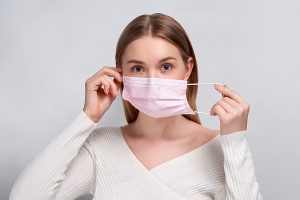
It is important to choose appropriate skin care products that do not cause further irritation to already sensitive skin.
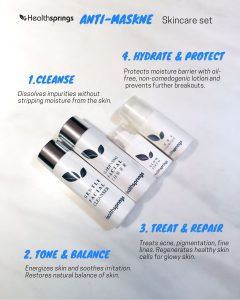
It is best to avoid face scrubs with abrasive beads or particles. Instead, use gentle skin cleansers that do not strip the skin of moisture, and follow up with a light moisturiser that hydrates skin without clogging pores.
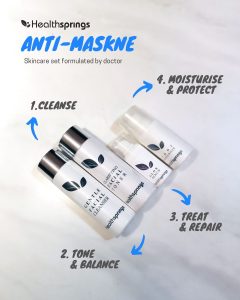
Our medical-grade Anti-Maskne skincare products are available at our clinic and online.
2. Oral medications
For more severe cases of maskne, oral medication may be necessary. Large and painful acne cysts or nodules that are not resolving may benefit from steroid injections to reduce the ongoing inflammation and avoid scarring.
3. Anti-Maskne skin treatments

Our ‘anti-Maskne facial’ can help to exfoliate the skin and remove dead skin cells, and deeply infuse calming and hydrating serums into the skin. This strengthens the skin’s protective moisture barrier and reduces skin irritation, especially on areas of the face that are in direct contact with the mask.
Chemical peels are great for unclogging pores and keeping them clear. This helps to treat inflamed pimples as well as prevent further breakouts.
Broadband light (BBL) and laser treatments gently target the P. acnes bacteria that causes acne, while at the same time reducing inflammation, redness, and acne scars. These treatments complement your skin care regimen, as they act on the deeper layers of the skin which creams and lotions cannot reach.
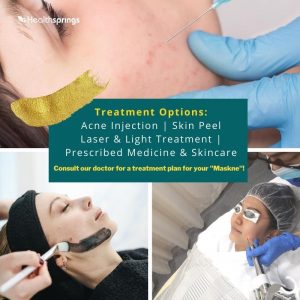
It is best to treat maskne early. If the bacteria and inflammation continue to fester, maskne is likely to get worse, which will then require more intensive treatment.[:]