

[:en]
Skin Problems in Babies and Children & How to Treat Them
Infants and children commonly develop skin rashes, which cause parents much worry.
Let us take a look at the common skin problems faced by young children, and what can be done to treat them.
Infants

Infantile acne (acne neonatorum)
- Infants can develop pimple-like spots on their face in the first few weeks to months after birth. This is thought to be due to stimulation of hormones. Infantile acne disappears within a few months without leaving scars.
Care Instructions: Treatment is usually not necessary, unless the acne is extensive or severe. It is important not to prick or poke at the pimples, or use over-the-counter acne creams, as these can cause damage to infant skin. If you are concerned that the infantile acne is causing scars, do seek medical advice early.
Cradle cap (seborrhoeic dermatitis)
- Cradle cap is a yellowish, thick scaly rash that occurs on the scalp, neck, and ears. It usually develops in the first month of life, and resolves within weeks.
Care Instructions: Baby oil, vaseline, or moisturisers can be applied to areas with thick scales and left on overnight, and gently shampoo in the morning to remove the scales.
Children of any age

Some of the common skin problems that young children face include heat rash, fungal skin infection, eczema, hives, impetigo, cold sores, viral rash.
Heat rash (miliaria rubra)
- Heat rash is common in our hot and humid Singapore weather, affecting both children and adults. Infants are more prone to developing heat rash as their sweat ducts are not fully developed. They appear as itchy, red bumps and small blisters, typically in the skin folds of the neck, armpits, and groin. Most cases of heat rash resolve within a few days.
Care Instructions: Treatment of heat rash includes using cold compresses to cool the skin, and avoiding thick clothing or swaddling infants in too many layers. Calamine lotion can relieve itch and discomfort. Mild steroid creams may be prescribed by your doctor if the rash is severe.
Fungal skin infection (Tinea)
- Fungal skin infection, more widely known as ringworm, is also prevalent in tropical Singapore. The term “ringworm” is due to the scaly ring-shaped appearance of the rash, like a worm circling around to its tail. It can affect any part of the body, commonly the neck, body, groin, and scalp, and is often itchy. Athlete’s foot is also a fungal skin infection.
Care Instructions: Treatment is an anti-fungal cream that must be used consistently until the rash clears. For severe cases, anti-fungal tablet may be prescribed.
Eczema

- Eczema is a common skin condition that starts in infancy or childhood and may persist into adulthood. It is characterised by an itchy red rash with cracked skin, commonly over the wrists, elbows, knees, and ankles. In infants, the rash may be on the neck, face, and body as well
Care Instructions: Read more about eczema and how to treat it in this article.
Hives (urticaria)
- Hives are raised swellings (weals) usually with surrounding redness (flare). They range from a few millimetres to several centimetres, and can last a few hours or days. In more severe cases, swelling of the eyes or mouth may occur as well. Hives develop as an allergic response to a substance, or as a response to insect bites or stings. Sometimes, the cause cannot be easily identified.
Care Instructions: Antihistamine medication and avoidance of triggers are the mainstay of treatment in hives. For recurrent hives where a drug or food allergy is suspected, a skin prick test may be done.
Impetigo (school sores)
- Impetigo is a skin infection with a typical appearance of honey-coloured crusted rashes. It usually occurs on the face and hands, although it can also develop on any part of the body. Children with eczema are more prone to developing this infection, due to bacteria easily entering through breaks in the skin at the sites of existing eczema.
Care Instructions: Treatment involves wet compresses to gently remove the crusts, and applying antibiotic ointment to the lesions. Antibiotic syrup may be prescribed if the infection is severe.
Cold sores (Herpes simplex)
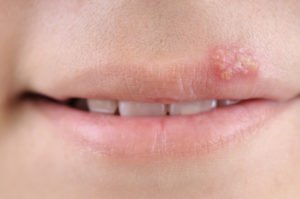
- Cold sores are a cluster of small blisters around the lips or nose. They are caused by the Herpes simplex virus, which is a very common virus. If it is the first time being affected by the virus, there may also be symptoms such as fever, sore throat, and lethargy. Some children may have recurrent cold sores, as the virus may stay dormant in the bloodstream for a long time, and reactivate during periods of physical or emotional stress. The blisters eventually burst and form a crust, and heal within 2 weeks.
Care Instructions: The virus from cold sores can be transmitted to others if the blisters have not crusted over. It is important to practice good hygiene such as handwashing, avoiding sharing food, drinks, cutlery, and personal items such as toothbrushes, and avoiding close contact with children and babies as their immune system is weaker.
Painkillers and oral gels help to ease the pain and discomfort due to cold sores. Antiviral creams and syrup may be prescribed to hasten recovery.
Viral rash
- Children can develop rashes on their face or body during a viral infection. Often, the rash starts a few days after the onset of fever. There are a few distinct rashes caused by specific viruses, such as roseola (human herpesvirus 6) and fifth disease (parvovirus B19). Children with viral rash usually appear well, and the rash is usually not itchy. Treatment is usually not necessary, as the rash resolves within a few days.
- If red spots or blisters appears on the palms and soles of the feet, this may be the notorious Hand, Foot and Mouth Disease. This is associated with fever and ulcers in the mouth or throat, and may cause significant pain and distress especially in infants and young children under the age of 5.
Care Instructions: Medication is usually given to minimise discomfort. Do encourage your child’s fluid intake, as they may become dehydrated if they refuse to eat or drink due to the pain. Until the blisters are dried and healing, the virus can be transmitted to others. It is therefore important to practice good hygiene and stay away from public spaces to minimise spread to others.
Are you concerned about a skin condition that your child suffers from? See one of our doctors for more information on what can be done to treat them.
[:]